The Ark of the Covenant: What Happened to It?
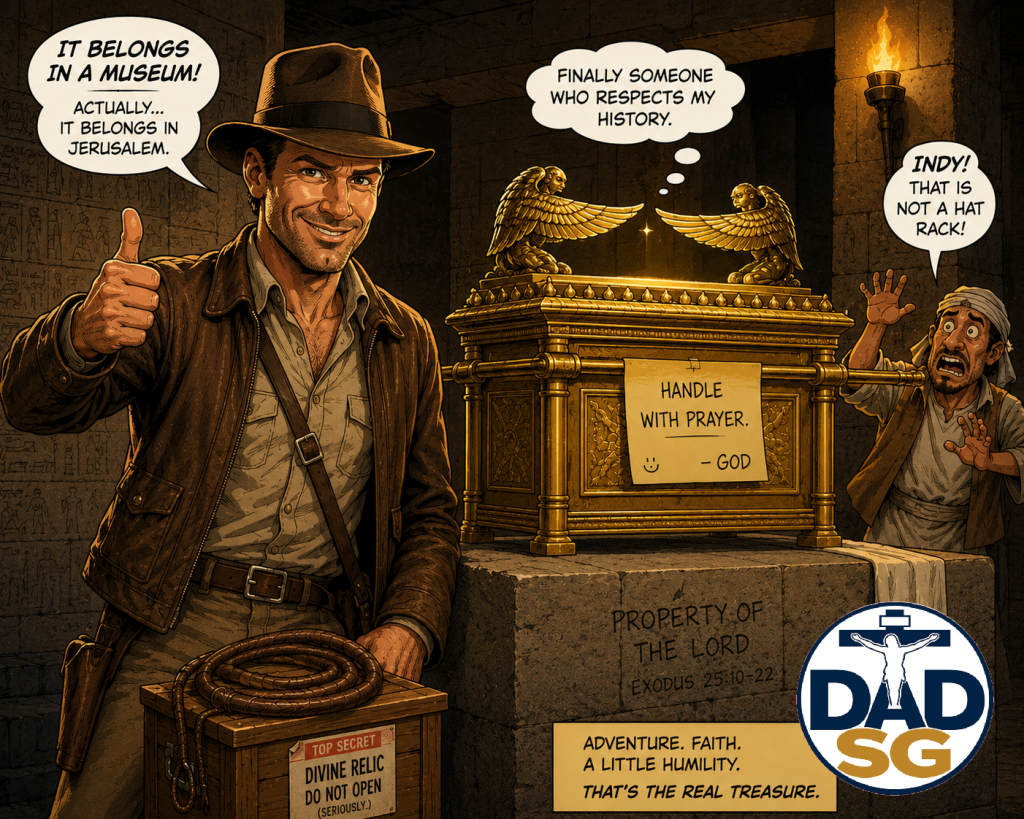
If your knowledge of the Ark of the Covenant comes mainly from Indiana Jones, prepare to be surprised.
The Ark of the Covenant was one of the holiest objects in Israel. God Himself designed it, specified how it was to be carried, and associated His presence with it.
But what happened to the Ark after it was built?
The answer takes us through some of the most fascinating, terrifying, and surprisingly amusing stories in the Old Testament.
Throughout these stories, one truth becomes clear:
The Ark was never an ordinary chest.
1. The Ark Among the Philistines
Israel Loses the Ark
1 Samuel 4:1-10
During a battle against the Philistines, the Israelites brought the Ark into the camp, hoping it would guarantee victory.
Unfortunately, they treated it almost like a lucky charm.
"If the Ark is with us, surely we cannot lose."
Instead, Israel was defeated.
Many died.
And the Ark was captured.
This is the first lesson:
God cannot be manipulated.
Even holy things cannot substitute for obedience and faithfulness.
Dagon Falls Before the Ark
1 Samuel 5:1-2,3,4,5
The Philistines brought the Ark into the temple of their god, Dagon.
One can almost imagine their celebration.
"We have defeated Israel. We have captured their sacred object. Our god has triumphed."
Then they woke up the next morning.
Dagon had fallen face down before the Ark.
Perhaps embarrassed, they picked him back up.
The following morning, Dagon had fallen again.
This time:
- his head was broken off,
- his hands were broken off,
- only the trunk remained.
The God of Israel did not need an army to defend His honour.
The idol simply could not remain standing in His presence.
The Tumours and the Golden Haemorrhoids
The Philistines soon discovered that possessing the Ark was not the victory they had imagined.
The people were afflicted with painful tumours.
Older English translations even rendered these as "emerods" — an old word for haemorrhoids. (1 Samuel 5:9)
Whether haemorrhoids, plague-related swellings, or some other form of tumour, the message was clear:
The God of Israel was not to be trifled with.
Eventually, the Philistines decided the Ark had to go.
But first, they wanted to make amends.
So they prepared guilt offerings in the form of:
- golden tumours, and
- golden mice (1 Samuel 6:5)
One cannot help but wonder what the Philistine goldsmith thought when he received this commission.
"Just to be sure I've understood correctly... you want me to make WHAT?"
The Bible can occasionally be unexpectedly funny.
Yet behind the humour lies a serious truth:
God is holy.
2. The Cows That Knew the Way Home
1 Samuel 6:7-8, 9-10, 11-12
The Philistines still were not entirely convinced.
Perhaps all of this had simply been a coincidence.
So they devised a test.
They took two cows that had never been yoked and had nursing calves. And they placed the Ark of God upon the cart.
Normally, the cows should have turned back toward their calves.
Instead, they went straight toward Israel.
"They turned neither to the right hand nor to the left."
Even the cows seemed to know where the Ark belonged.
The Philistine rulers followed behind, watching in astonishment.
3. Beth-shemesh: Reverence for Holy Things
The People Looked Upon the Ark
1 Samuel 6:19,20
The people of Beth-shemesh rejoiced when the Ark arrived.
But some treated the Ark in a manner contrary to its holiness.
Many died.
The people responded:
"Who is able to stand before the LORD, this holy God?"
It is a sobering moment.
Holy things are not ordinary things.
God's holiness demands reverence.
4. Uzzah and the Ark
Good Intentions Are Not Enough
2 Samuel 6:3-4,5-6,7
King David desired to bring the Ark to Jerusalem.
There was celebration.
Music.
Rejoicing.
The Ark was placed upon a new cart drawn by oxen.
Then the oxen stumbled.
Uzzah reached out to steady the Ark.
He was struck dead.
At first glance, this may seem harsh.
After all, Uzzah appeared to have good intentions.
But the problem had begun earlier.
God had instructed that the Ark was to be carried by means of poles by those appointed to do so.
Instead, it had been placed on a cart.
Even sincere intentions do not exempt us from reverence and obedience concerning holy things.
David himself became afraid of the LORD that day saying:
"How shall the Ark of the Lord be brought to me?" (2 Samuel 6:9)
5. The Blessing of Obed-Edom
"Maybe You Keep It For A While"
2 Samuel 6:10–11
David suddenly decided he was no longer in a hurry to bring the Ark into Jerusalem.
Instead, the Ark remained in the house of Obed-Edom for three months.
One wonders whether Obed-Edom volunteered for the assignment.
After all, someone had just died touching it.
Yet during those three months:
"The LORD blessed Obed-edom and all his household."
The same Ark associated with fear also became a source of blessing.
God's holiness and God's goodness are never opposed to one another.
6. David Brings the Ark to Jerusalem
Dancing Before the LORD
2 Samuel 6:12-13,14-15
After hearing of God's blessing upon Obed-Edom's household, David finally brought the Ark into Jerusalem according to God's instructions.
This time, sacrifices were offered.
There was shouting.
Music.
Celebration.
David danced before the LORD with all his might.
His wife Michal looked upon him with contempt.
David, however, cared little about appearing dignified.
The presence of God among His people was cause for joy.
Sometimes reverence includes awe.
Sometimes reverence includes celebration.
7. The Ark in Solomon's Temple
The Glory Fills the Temple
1 Kings 8:1–11
Eventually, the Ark was brought into the Temple built by Solomon.
The priests placed it within the Most Holy Place beneath the wings of the cherubim.
Then:
"The cloud filled the house of the LORD."
The priests could not continue ministering because of the glory of the LORD.
This was not the first time this had happened.
Earlier, when the Tabernacle had been completed in the wilderness, the glory of the LORD filled the Tabernacle (Exodus 40:34–35). Now, once again, God's presence descended as the Ark came to rest in the Temple built by Solomon.
The same God who had dwelt among His people in the Tabernacle now dwelt among them in the Temple.
The Ark remained closely associated with God's presence dwelling among His people.
8. What Happened to the Ark?
The Ark Disappears
2 Kings 25:13–17
Surprisingly, the Bible never records the destruction of the Ark.
When Jerusalem fell to Babylon, many Temple treasures are listed.
Yet the Ark is never mentioned.
Its fate remains a mystery.
Jeremiah Hides the Ark
According to this ancient account, the prophet Jeremiah took the Ark and hid it in a cave on Mount Nebo.
He declared that its location would remain unknown:
"until God gathers his people together again and shows his mercy."
Whether hidden, lost, or preserved by God, the Ark vanished from human history.
(You will find 2 Maccabees in Catholic editions of the Bible. Why some Christians have this book in their Bibles while others do not is an interesting story that we will explore another time.)
9. The Ark Appears Again
The Heavenly Ark
Revelation 11:19
Near the end of Scripture, John writes:
"Then God's temple in heaven was opened, and the ark of his covenant was seen within his temple."
The Ark suddenly reappears.
Not on earth.
But in heaven.
Immediately afterwards, Revelation continues with one of the most remarkable visions in the entire Bible.
We will return to that story another time.
Why the Story of the Ark Matters
The Ark of the Covenant was never an ordinary chest.
It revealed God's holiness.
It brought blessing.
It inspired fear.
It prompted celebration.
It humbled kings.
It toppled idols.
It terrified Philistines.
It even resulted in the manufacture of what may be history's most unusual guilt offerings: golden tumours and golden mice.
The story of the Ark reminds us that God is not ordinary.
He cannot be manipulated.
He cannot be domesticated.
Yet this same holy God desires to dwell among His people.
As we continue our journey through Scripture, we will discover that the Ark's story does not end in the Old Testament. It points beyond itself to even greater realities that God had planned from the very beginning.