The Ark of the Covenant
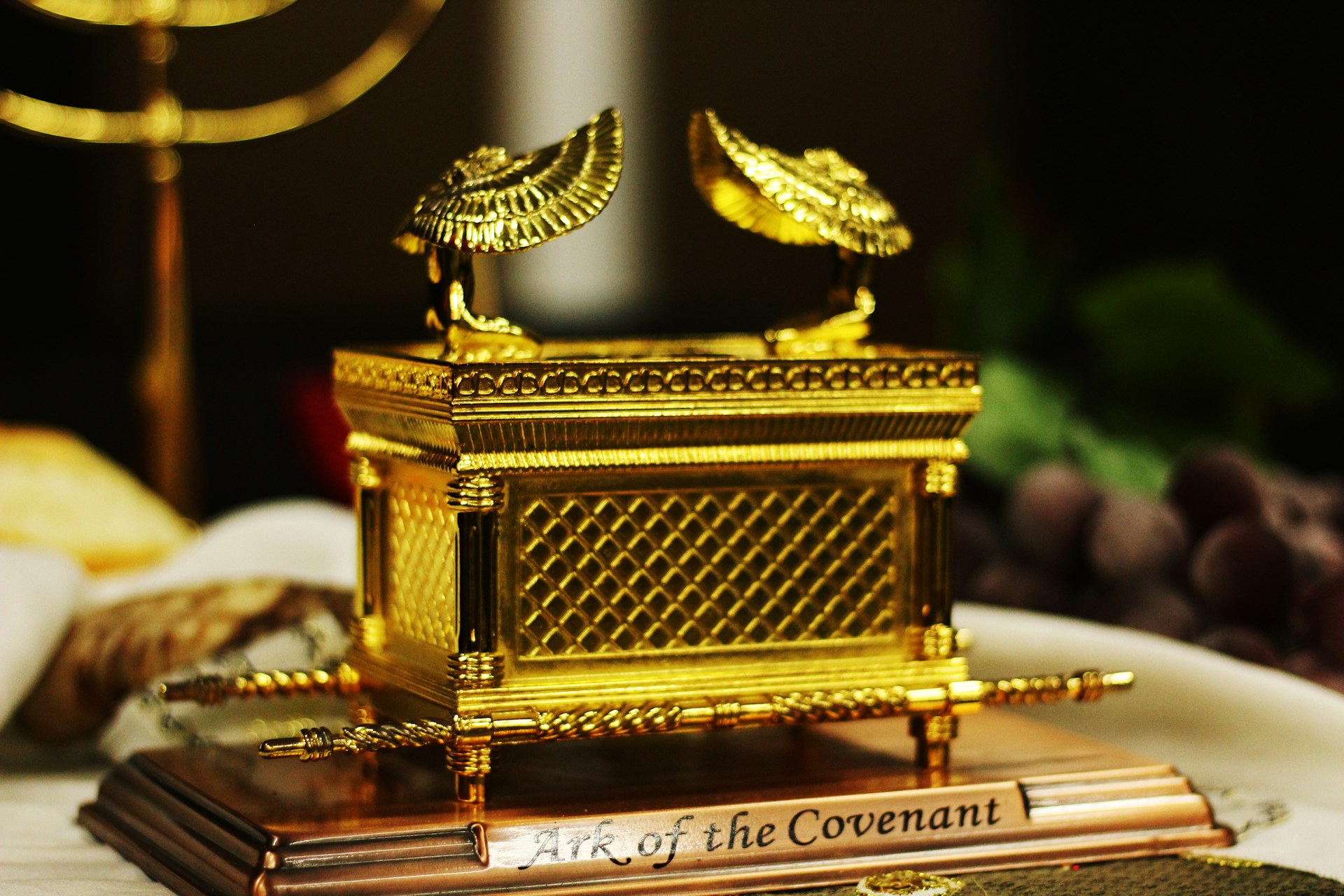
The Ark of the Covenant is one of the most important objects in the Old Testament. The Ark will later become important in understanding several Catholic teachings. Before we get there, we should first understand what the Ark actually was.
1. How the Instruction Was Given
God Gives Moses the Pattern on the Mountain
Exodus 25:8–9
God tells Moses:
“Let them make me a sanctuary, that I may dwell in their midst.”
Then He says that everything must be made according to the pattern shown to Moses.
This is important because the Ark was not invented by Israel. It was made according to God’s revealed design.
2. How the Ark Was to Be Made
The Ark’s Size
Exodus 25:10
God commands that they make an ark of acacia wood. It was to be:
- two and a half cubits long (about 1.1 m)
- one and a half cubits wide (about 0.7 m)
- one and a half cubits high (about 0.7 m)
A cubit is an ancient unit of length roughly on the distance from the elbow to the tip of the middle finger. The standard cubit is about 18 inches or 45 cm.
The Ark was a sacred chest, not a large structure.
The Ark’s Material
Exodus 25:10
The Ark was made of Acacia wood. This is a durable, desert suitable, resistant, precious wood that is fitting for holy use.
Acacia wood was suitable because it is known for being:
- hard
- dense
- durable
- resistant to decay
- resistant to insects
- suitable for long-lasting furniture and sacred objects
Many Christians have also seen a fitting symbolism in the use of acacia wood. Because it is durable and resistant to decay, it can remind us of endurance and incorruptibility.
It Was Overlaid with Gold
Exodus 25:11
The Ark was to be overlaid with pure gold, inside and outside, and have a moulding of gold around it.
In Scripture, gold is repeatedly used for holy things connected to worship:
- the Ark — Exodus 25:11
- the mercy seat — Exodus 25:17
- the cherubim — Exodus 25:18
- the Table of the Bread of the Presence — Exodus 25:23–24
- the lampstand — Exodus 25:31
- the altar of incense — Exodus 30:1–2, 3
Gold marks something as belonging to God’s sanctuary. Gold also signifies kingship and glory. Pure gold is precious, radiant, and does not rust like iron. It suggests purity and incorruptibility.
Gold is used outside AND inside of the Ark. That means its holiness is not merely external.
It is not just outwardly beautiful. Even the hidden interior is covered with gold.
This can become a powerful spiritual point:
What carries holy things should not only look holy outside, but be consecrated within.
But Why All the Gold?
Revelation 4:4, 8:3, 21:18, 21:21, 15:6–7
Even in the heavenly worship described in Revelation, gold appears repeatedly in connection with sacred worship and heavenly realities. So gold is not merely an earthly symbol. It is associated with heavenly worship as well.
God does not need gold. Gold does not make God holier. Rather, gold teaches us how to recognise holiness.
It trains the people of God to see:
- This is set apart.
- This belongs to worship.
- This is not ordinary.
That is why in the Catholic Church, you can see gold being used for sacred vessels and other items.
It Had Four Gold Rings
Exodus 25:12
Four gold rings were to be cast for it:
- two rings on one side
- two rings on the other side
These rings were for the poles used to carry it.
It Had Poles of Acacia Wood Overlaid with Gold
Exodus 25:13–14
The poles were made of acacia wood and overlaid with gold.
They were inserted through the rings so the Ark could be carried.
The Poles Were Not to Be Removed
Exodus 25:15
This is very important:
“The poles shall remain in the rings of the ark; they shall not be taken from it.”
This shows that the Ark was designed to be carried in a specific sacred way.
There was a passage from 2 Samuel 6:3-4, 5, 6-7 where the Ark was carried on a new cart drawn by oxen, and the oxen stumbled. Uzzah reached out to steady the Ark, and he was struck dead.
The issue was because the Ark was carried in a way contrary to God’s instruction.
3. The Mercy Seat and the Cherubim
The Mercy Seat
Exodus 25:17
God commands Moses to make a mercy seat of pure gold.
This was the cover of the Ark.
Two Cherubim of Gold
Exodus 25:18–19, 20
Two cherubim were to be made of hammered gold, one at each end of the mercy seat.
Their wings were to spread upward, overshadowing the mercy seat.
This is interesting to note, since just a few chapters earlier at Exodus 20:4–5, the Ten Commandments was just given and God instructed that no “graven images” be made. We’ll discuss this at a later time.
God Would Meet Moses There
Exodus 25:22
This is one of the most important verses:
“There I will meet with you…”
God says He will speak with Moses from above the mercy seat, between the two cherubim.
So the Ark is not merely a religious object. It is associated with the presence and communication of God.
4. What Was Placed Inside the Ark
The Testimony / Tablets of the Covenant
Exodus 25:16
God says:
“You shall put into the ark the testimony that I shall give you.”
This refers to the tablets of the covenant.
The Tablets Placed Inside
Exodus 40:20
Moses places the testimony into the Ark, puts the poles on the Ark, and sets the mercy seat above it.
Hebrews Summarises What Was Associated with the Ark
Hebrews 9:4
Hebrews says the Ark contained:
- the golden urn holding the manna
- Aaron’s staff that budded
- the tablets of the covenant
The Manna Kept Before the Lord
Exodus 16:32, 33–34
God commanded that an omer of manna be kept:
- throughout your generations
- that they may see the bread which He fed them with during the Exodus
- placed before the testimony
Manna is the bread from Heaven.
Later, after the Ark is constructed, Jewish tradition understands this manna to be associated with the Ark.
Aaron’s Staff Kept Before the Testimony
Numbers 17:10
God commanded that Aaron’s staff:
- be placed “before the testimony”
- be kept as a sign
This comes after the rebellion of Korah, when God causes Aaron’s rod to bud as a sign of his chosen priesthood.
“Before the Testimony”
Exodus 25:22
The Ark of the Covenant was also called the Ark of the Testimony, because it contains the tablets.
The Old Testament describes the manna and Aaron’s rod as being kept “before the testimony.” By the time of the New Testament, Hebrews 9:4 associates both items with the Ark of the Covenant itself.
5. The Glory of God and the Ark
The Glory Cloud Filled the Tabernacle
Exodus 40:34–35
When the Ark was completed and placed into the Tabernacle, the Glory of God filled it.
- The cloud represented God’s presence.
- God’s glory overshadowed (ἐπισκιάζω — episkiazō) the Tabernacle.
- The Ark was housed within the Tabernacle.
- God’s presence dwelt there in a special way.
6. Why the Ark Matters
At first glance, the Ark of the Covenant may appear to be little more than an ornate chest from the Old Testament. Yet Scripture treats it as one of the holiest objects in Israel. God Himself designed it, specified its materials, determined how it was to be carried, associated His presence with it, and preserved sacred memorials within it.
As we continue our journey through Scripture, we will discover that the Ark’s significance does not end in the Old Testament. Its story points forward to even greater realities that God had planned from the beginning.
Find out what happened to the Ark of the Covenant in the next article here.